

From Blank Page to Layered Story: A Simple Junk Journal Formula
One of the most common questions in junk journaling is also one of the simplest:
Where do I start?
A blank page can feel surprisingly intimidating, especially when you have a pile of beautiful papers, tags, tickets, labels, and scraps waiting to be used. The good news is that you do not need an elaborate plan—or twenty different supplies—to create a page that feels layered and complete.
A simple formula can help you get started.
Begin with a Background
Choose one main paper or printable page as your foundation. This could be a softly patterned journal page, a book page, a ledger sheet, sheet music, or a piece of neutral scrapbook paper.
Your background does not need to be busy. In fact, a quieter base often makes the layered pieces stand out more clearly.
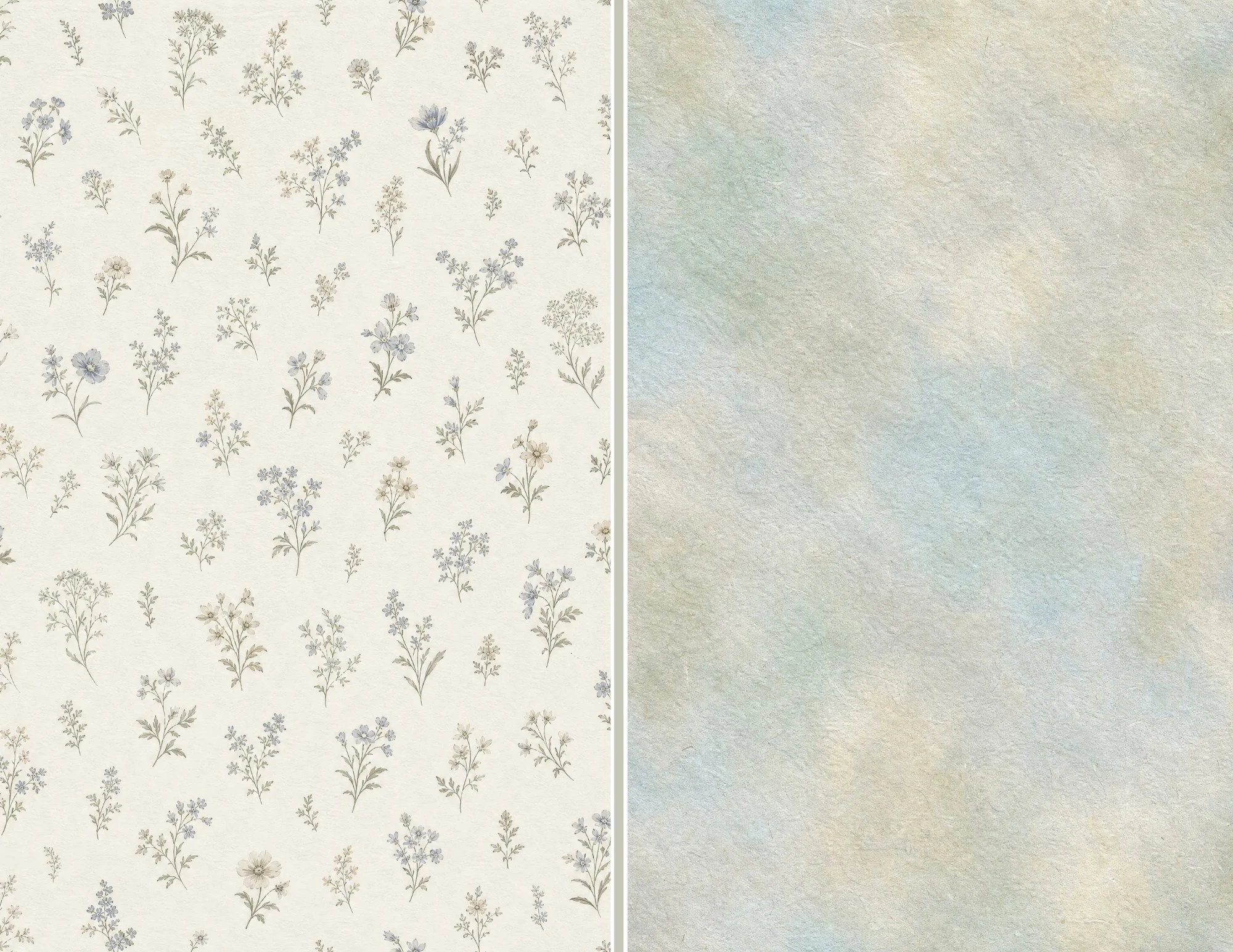
Junk journal page is 11 × 8.5” with different designs on each half of the page.
Add One Focal Piece
Next, choose one item that will draw the eye.
This might be:
A journal card
A photograph
A botanical illustration
A postcard
A large tag
A decorative label
Place it slightly off-center rather than directly in the middle. This usually creates a more natural, collected look.
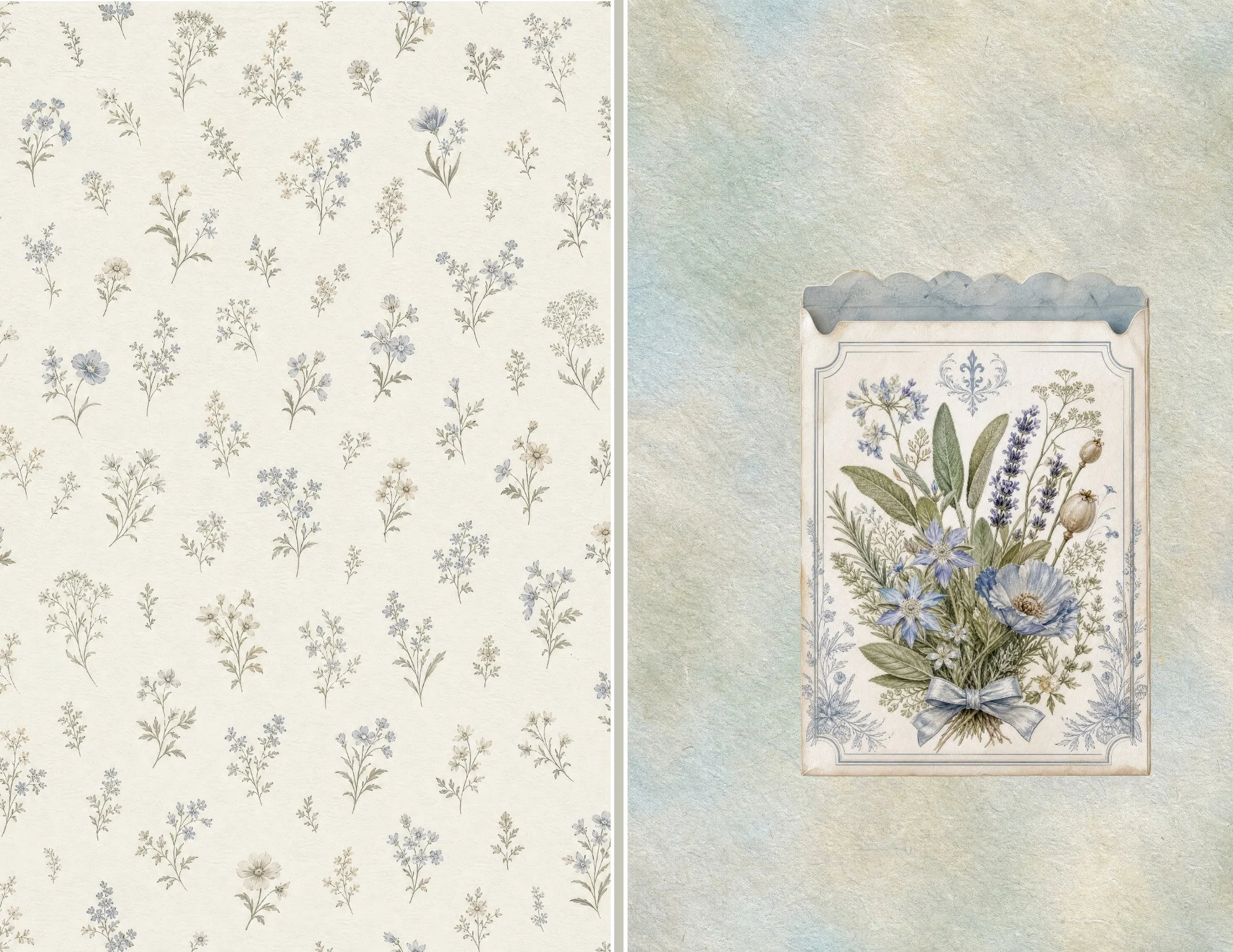
Build the Middle Layer
Add two or three smaller paper elements behind or around the focal piece. Ephemera - tickets, torn book pages, labels, map fragments, and scraps of patterned paper - all work well.
Let the pieces overlap slightly. You do not need to show every detail of every layer. Sometimes just a narrow edge of paper peeking out is enough to add interest.
Try mixing different shapes and sizes so the page does not feel too uniform.
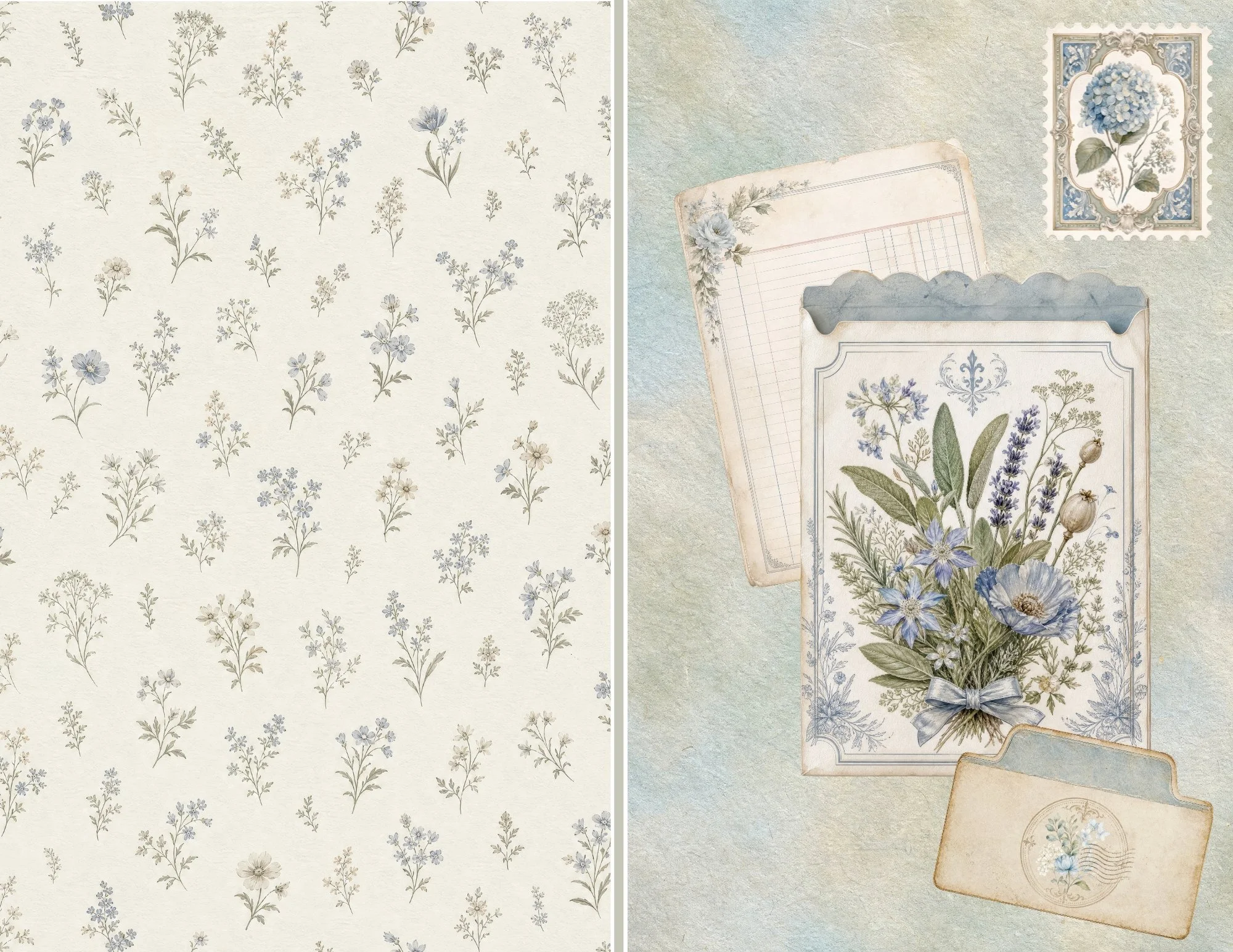
Ephemera pieces should be similar in style (vintage, retro, graphic art, etc.) and in color schemes to blend cohesively on a page.
Include a Small Accent
Finish the cluster with one or two small details, such as:
A faux postage stamp
A wax seal image
A tiny tag
A butterfly or floral cutout
A fabric or ribbon scrap
A paper tab
These small accents help connect the larger pieces and give the page a finished look.
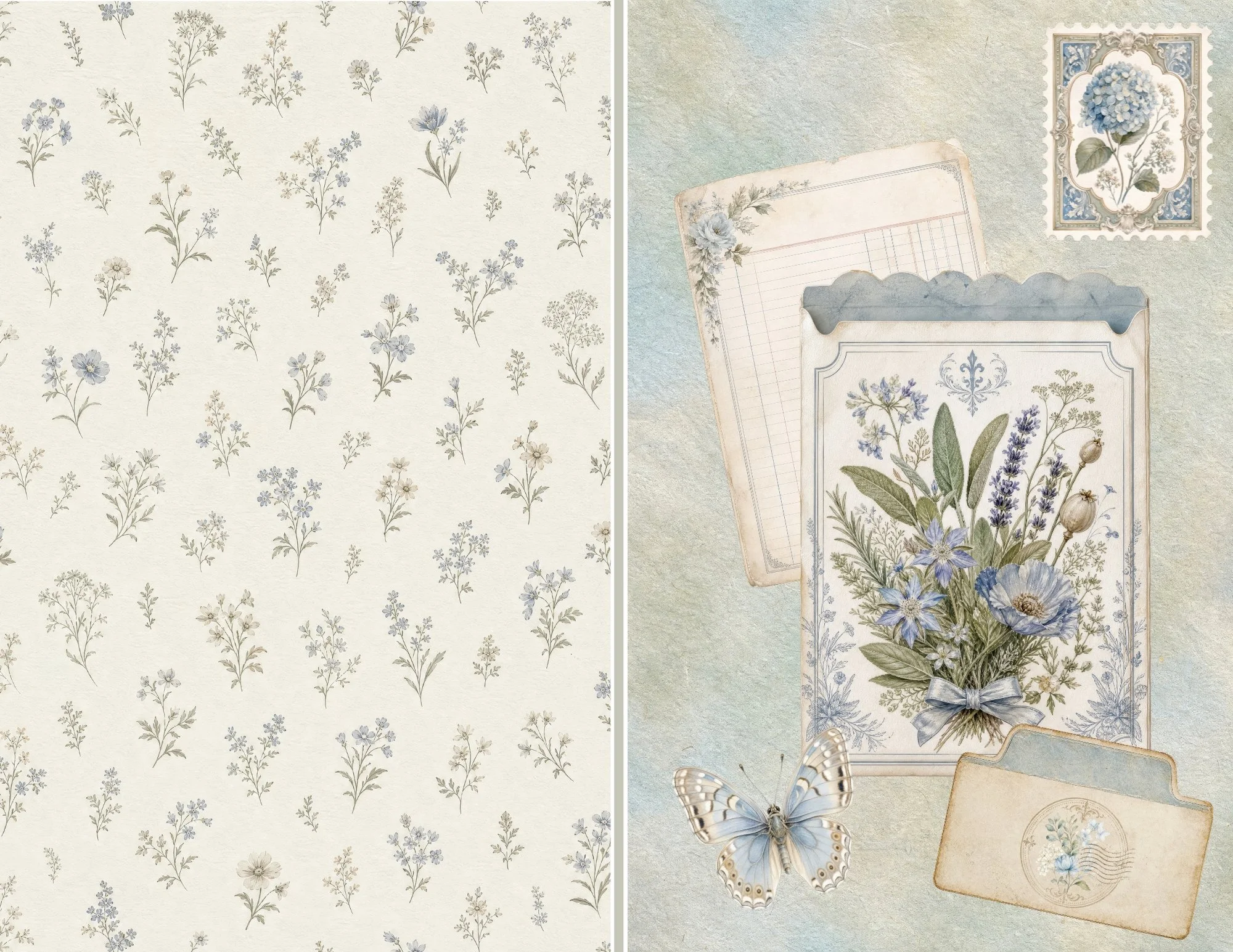
Leave Room to Breathe
Layered does not have to mean crowded.
Leaving some open space gives the eye a place to rest and makes your focal point more noticeable. It also leaves room for journaling, photographs, or another element you may want to add later.
Use the Rule of Three
When you feel stuck, try grouping items in threes.
For example:
One large journal card
One medium ticket
One small stamp
Varying the size of the three pieces creates balance without making the layout feel overly planned.
Let the Page Tell a Story
Your pieces do not have to match perfectly, but they should feel as though they belong together.
A botanical label, handwritten note, and faded photograph might suggest a gardener’s journal. A map fragment, luggage label, and postcard could create the feeling of a forgotten journey.
Even a simple page becomes more meaningful when the pieces suggest a mood, memory, or story.
There Is No Wrong Way to Layer
The best part of junk journaling is that there are no strict rules. You can rearrange pieces before gluing, cover something you do not like, or add another layer later.
Start with a background, choose a focal point, add a few supporting pieces, and finish with a small accent.
That is often all it takes to turn a blank page into something that feels personal, layered, and beautifully complete.
